Tech, Ethics, & Society (Undergraduate)

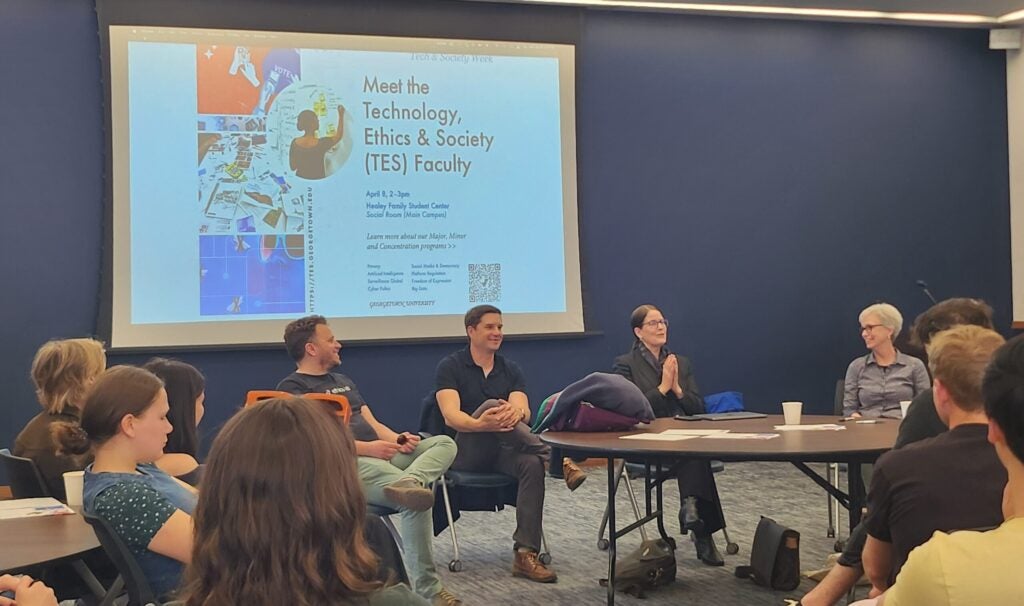
Georgetown’s undergraduate Tech, Ethics & Society (TES) Program gives students tools to understand and evaluate the way digital technology is shaping our world, and to imagine new ways to ensure that it serves human values.
TES programs equip students to become responsible technologists, designers, policy makers and activists, as well as informed citizens that will contribute to our broader public understanding of how technological change can be harnessed for good.
Featured Courses
The Problem of AI – Fall 2026, Professor Laura DeNardis
Artificial intelligence and new digital technologies are transforming society in profound ways. The same technologies advancing medicine, finance, and every industrial sector are creating generational disruptions to everything from work, the environment, and the creative economy to family life, the wellbeing of children, and what it means to be human in the age of AI. Difficult governance questions follow. Who owns creative works and culture? How do we keep humans in the loop of machine decisions with consequences for national security, privacy, speech, and human safety? Who is responsible when autonomous technologies cause harm and how can the most vulnerable members of society be protected? How can discriminatory bias be identified and mitigated in opaque technologies hidden from view? How can systems authenticate whether someone is a live human or whether a video or image is real or a deepfake? How should cyber governance evolve when hacks are no longer carried out by humans? What regulatory structures are necessary to promote innovation and productivity while addressing these societal concerns? How these many questions unfold will shape humanity for decades. Yet, regulatory frameworks around agentic AI, companion robots, chatbots, and nearly every other manifestation of artificial intelligence are lagging behind technological change.
Students in this course will confront the major AI governance flashpoints of our time and analyze emerging frameworks of technology governance rising to address these concerns. Learning objectives include:
1. Develop Sociotechnical Thinking. Through real-life case studies in AI and theoretical frameworks from Science & Technology Studies (STS) and global technology governance, understand the societal implications of AI systems, including: chatbots and companion robots; chips and compute hardware; generative AI and Large Language Models (LLMs); AI cloud infrastructure, data centers, and hyperscalers; cybersecurity systems; AI applications and AI agents; and supporting energy systems.
2. Understand Multistakeholder Points of Power in AI Governance. Learn how technology governance involves distributed levers of control across technical design and standardization, the policymaking role of private industry, algorithmic ordering, traditional regulation, global technical coordination, and arrangements of digital infrastructure as arrangements of power.
3. Analyze Real-World AI Governance Flashpoints. Become well-versed in contemporary AI governance debates, identifying what is at stake, explaining alternatives, and articulating stakeholder positions. Flashpoint examples include: proof of liveness; cybersecurity and hacks without humans; governance of agentic AI; inauthentic behavior, information integrity and deepfakes; the wellbeing of children; the future of work; governance of companion robots; algorithmic bias and discrimination; national security and human safety; and data governance and privacy.
4. Develop Evidence-Based, Ethical Stances. Students will have the opportunity to stake out evidence-based, personal, ethical stances on the major AI governance debates of the contemporary era, making feasible and practicable recommendations for a technological future for the good of humanity.
AI and Mind – Fall 2026, Professor Will Fleisher
One long-running goal of the field of artificial intelligence is to create artificial minds. One significant impediment to achieving this goal, and to determining when it has been achieved, is that we don’t fully understand what minds are. We are not sure what it takes to have a mind, or what the relationship between minds, brains, and bodies is. A second issue is that we also don’t fully understand the most sophisticated contemporary AI systems. These systems are “black boxes”: they are opaque even to AI researchers and developers. In this seminar, we will study philosophy of mind and cognitive science. We will also study contemporary AI systems and the interpretability research concerning how they work. We will seek to understand what it would take for an AI system to have a mind. This will require facing some of the most difficult questions in philosophy and cognitive science. We will also consider what we can learn about human minds from research into AI.
Computer Science and Society: Interdisciplinary Explorations in Computer Science – Fall 2026, Professor Yoshi Kohno
Some of the greatest advances in computer science – and in science and technology in general – are the result of explorations spanning computer science and other disciplines. In this course, students will explore the intersection between computer science and other disciplines. Within computer science, we will use computer security as a central lens because computer security, with its both adversarial and defensive elements, creates unique tensions for consideration. Through both instructional-guided study and self-study, students will explore foundational and cutting-end results from the social sciences and other disciplines and then explore the relationship between those results and past, current, and possible future directions in computer science. Throughout the course, students will produce writings reflecting their findings and offering directions for consideration for future computer scientists as well as future innovators in other disciplines.
Fritz Family Fellowship Program (Graduate & Undergraduate)
CDE faculty teach graduate-level courses through various departments and schools, including Communication, Culture, & Technology; Computer Science; Philosophy, and Law. They provide graduate-level faculty mentorship through the Fritz Family Fellowship program, a Tech & Society Initiative.
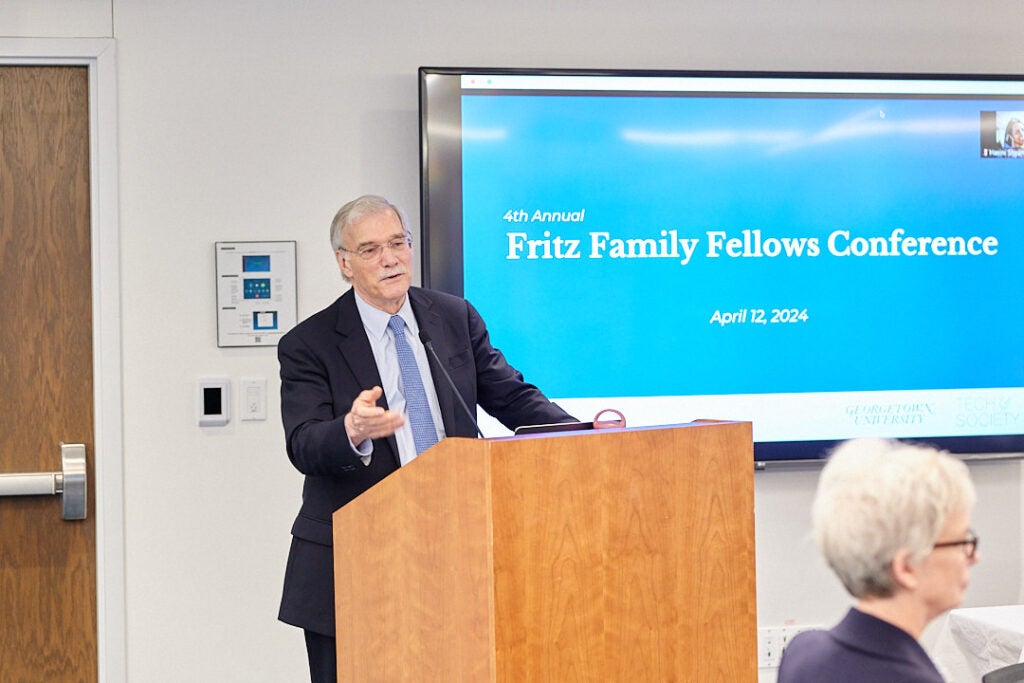
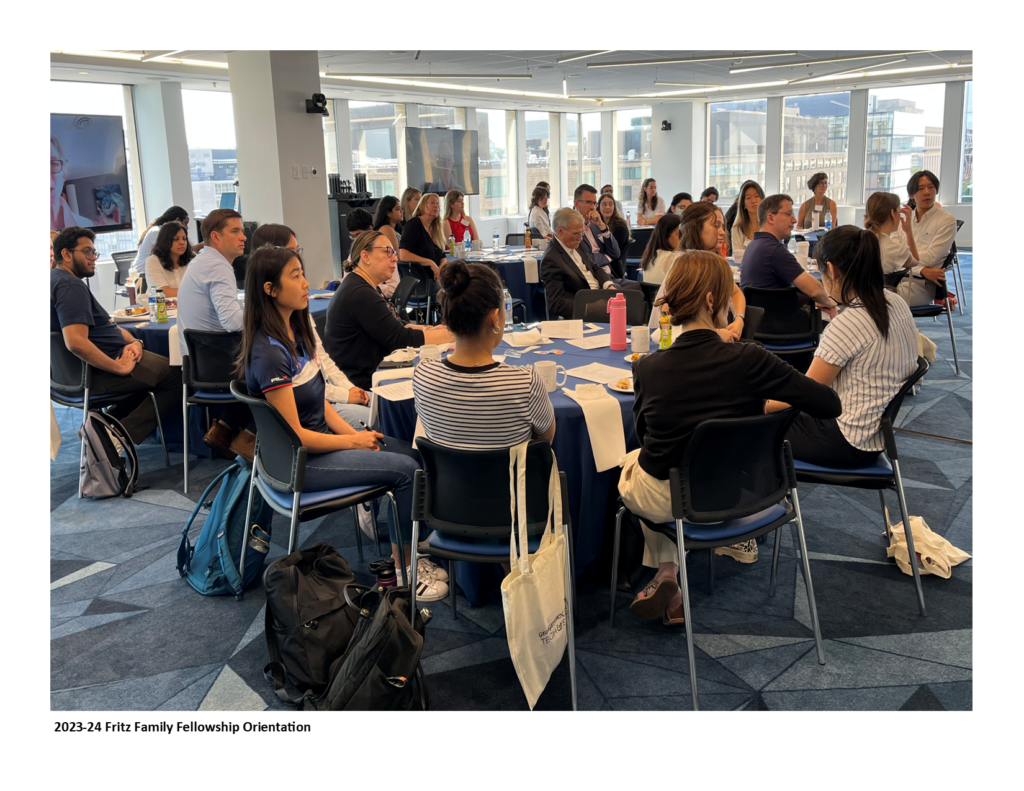
The Fritz Family Fellowship is a unique interdisciplinary program in which fellows co-design a research project with faculty and are mentored by faculty from at least two different parts of the campus. CDE faculty, along with colleagues across the Tech & Society network, contribute their time and expertise to help achieve the Fritz goal of cultivating the next generation of leaders with expertise in the social impacts of technology. Learn more about the Fellowship